Implementation of the 12-Factor App Methodology with AWS for SaaS (Part 1)
An AWS-oriented adaptation of 12-factor principles focused on codebase, dependency isolation, and environment-based configuration for SaaS delivery.
Config separation pattern
# .env.example
APP_ENV=production
DB_HOST=
DB_USER=
DB_PASSWORD=

# Runtime injection pattern
export DB_PASSWORD=$(aws secretsmanager get-secret-value \
  --secret-id myapp/prod/db \
  --query SecretString --output text)
Keep configuration out of source code and inject it at runtime.
Original publication
This post is adapted from the original LinkedIn article: Implementation of The 12 Factors App Methodology with AWS Cloud for a SAAS Product - Part 1
Scope of part 1
This part focuses on three factors from the 12-factor methodology and maps them to practical AWS service choices:
- Codebase.
- Dependencies.
- Config.
1) Codebase: one codebase, many deploys
The core principle is to maintain a single source of truth in version control and promote that code through environments via deployment pipelines.
AWS mapping discussed in the source:
- CodeCommit for managed Git hosting and collaboration.
- Team workflows around encrypted, centralized source control.
2) Dependencies: explicit declaration and isolation
Applications should declare every dependency and avoid relying on implicit runtime assumptions.
AWS mapping discussed in the source:
- Language-native package managers (for example npm, pip, Maven, Gradle).
- CodeBuild for reproducible build and test packaging workflows.
This keeps builds consistent and improves deploy confidence across environments.
3) Config: store config in the environment
Configuration should be separated from code and injected per deployment target.
AWS mapping discussed in the source:
- Secrets Manager for credential lifecycle and rotation.
- Parameter Store / KMS-related practices for secure config handling.
- Lambda-based automation for secret rotation workflows.
Practical takeaway
Treating codebase discipline, dependency isolation, and environment-managed config as foundational design rules makes SaaS systems easier to scale, audit, and operate.
Read more
For the full article and linked diagrams, read the original source:
Related posts
Implementation of the 12-Factor App Methodology with AWS for SaaS (Part 2)
Part 2 maps 12-factor principles 4 through 8 to AWS patterns for attached resources, release separation, stateless processes, port binding, and concurrency.
Implementation of the 12-Factor App Methodology with AWS for SaaS (Part 3)
Part 3 maps factors 9 through 12 to AWS-aligned operations, including disposability, dev-prod parity, log streams, and one-off admin processes.
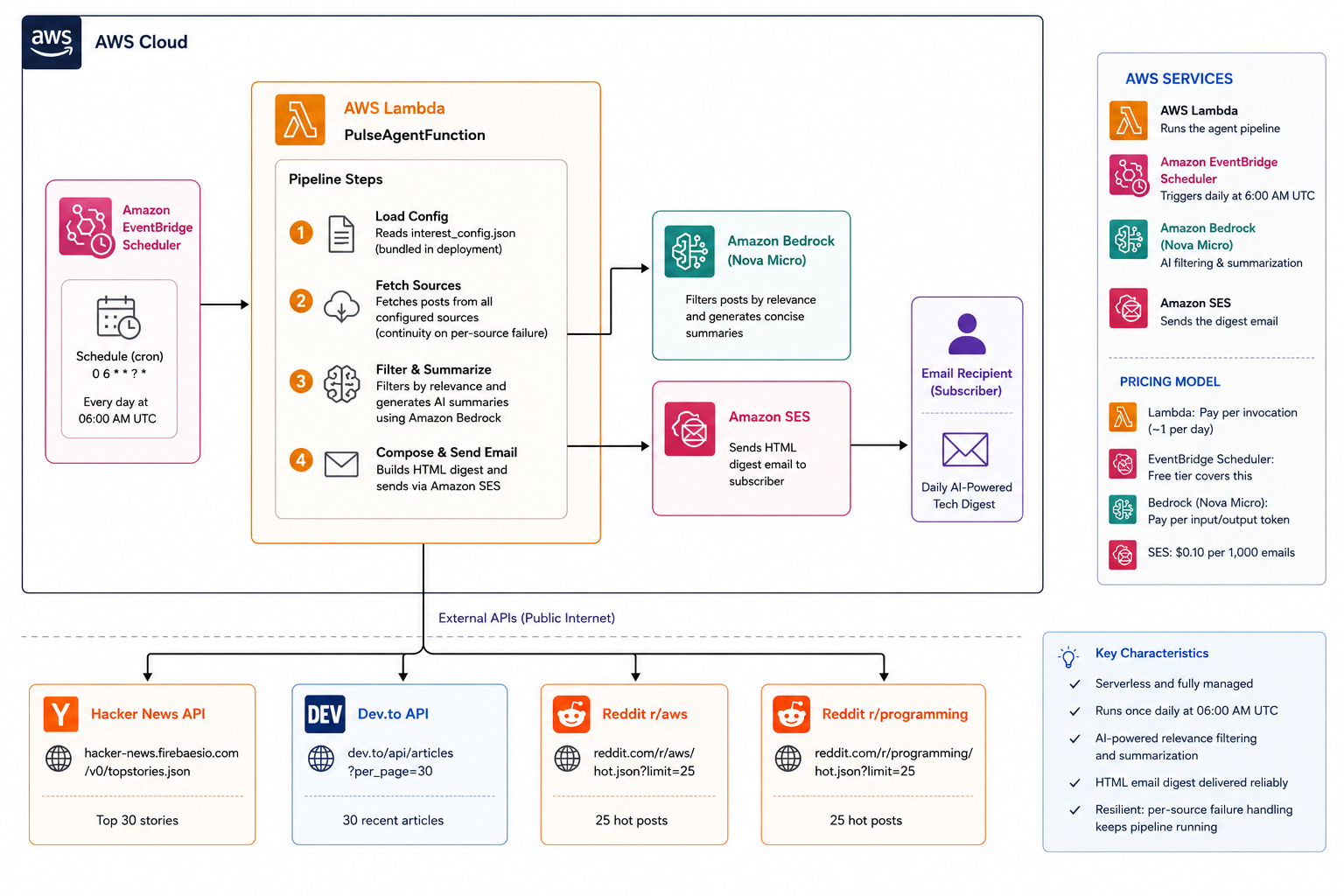
Weekend Agent Challenge: Dev Community Pulse Agent
A weekend-built serverless AI agent that wake up at 6 AM, scans developer communities/news/posts, filters what matters with Amazon Bedrock, and delivers a curated digest by email.